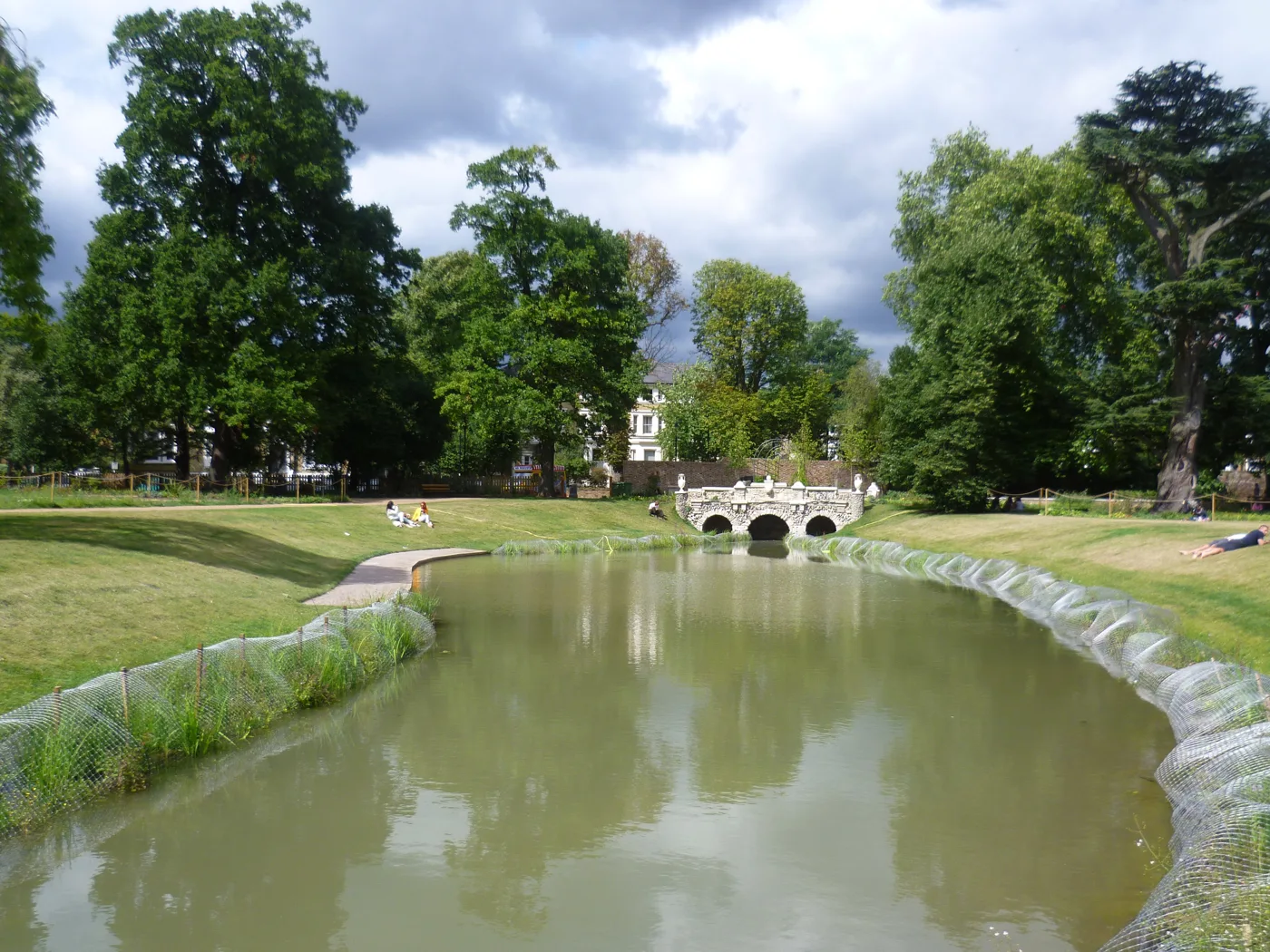

Cabinet agreed in principle on 9 September to lease part of Walpole Park for a 1,200-seat Troubadour theatre. A two-week objection notice comes next.
Updated 11 September 2026: cabinet agreed the plan in principle on 9 September. The decision and what comes next are below. Our preview, published on 5 September before the vote, follows it unchanged.
What cabinet decided on 9 September
Ealing Council’s cabinet has agreed in principle to lease part of Walpole Park to Troubadour Theatres Ltd for a temporary theatre. The lease would run for three and a half years and is subject to planning permission.
It is not the final decision. The draft minutes record that a final cabinet report will come back for that. Cabinet also agreed to keep Appendix 3, which holds the financial terms, out of publication.
Three councillors addressed cabinet on the item before the vote: Cllr Malcolm, Cllr Gallant and Cllr Welsby.
Why Walpole Park
The minutes give cabinet’s reasons for choosing the park:
- all the borough’s parks were looked at, but the project only works close to an Elizabeth line station
- the tent needs good access and several safe exits for a big crowd, which ruled out many sites
- most of the larger parks were too far from the Elizabeth line, some had waterlogging and others had a large tree canopy
- Troubadour already owns the dome tent and wants to reuse it
- the site is where the Ealing Summer Festival is held, for the same reasons
The minutes also list the benefits cabinet is counting on. They include free tickets for local schools, jobs, work experience and discounted tickets for residents. They add lease income for the parks and footfall for Ealing Broadway businesses. The council says it carries none of the financial risk.
Cabinet sees the three years as a test. The aim is to build the case for a permanent theatre on a brownfield site elsewhere in the borough.
The minutes still do not say where the Ealing Summer Festival will go.
What happens next
- A statutory notice. Walpole Park is open space, so the council must advertise the lease for two consecutive weeks in a local newspaper. That is the formal objection window. The minutes say the comments and objections will go back to cabinet.
- A planning application, which will be referred to the Mayor of London.
- A final cabinet decision on whether to grant the lease, with the objections in front of it.
We will report the notice when it is published.
Our preview, published 5 September
Ealing Council’s cabinet will be asked on Wednesday to agree in principle to lease part of Walpole Park to a commercial theatre operator for three and a half years.
The report going to the meeting names the company as Troubadour Theatres Ltd and the venue as the Troubadour Ealing Broadway Theatre. It would be a temporary structure holding more than 1,200 people and running more than eight shows a week.
Two details in the report are worth pulling out. The Ealing Summer Festival is being moved out of Walpole Park to make room for the theatre. And the fee Troubadour would pay is being withheld from publication.
What cabinet is actually deciding
The decision on Wednesday is not the final one. Officers are asking cabinet to agree in principle to grant the lease, subject to planning permission, and to note that a further report will come back seeking the final decision.
Cabinet is also being asked to agree that Appendix 3, the draft lease, is not for publication. The report cites paragraph 3 of Schedule 12A of the Local Government Act 1972, which covers information about the financial or business affairs of a particular person, and says the public interest test has been considered. Appendix 3 is where the fee is set out.
The report is explicit about what the council would and would not pay:
- Troubadour Theatres Ltd would be the lead contractor, “responsible for funding, developing and operating the site”.
- A fixed fee would be payable to the council for three years. The amount is in the exempt appendix.
- There are no revenue or capital cost implications for the council.
- The income would be spent on parks and open spaces across the borough, including, in the report’s words, “areas that have experienced budget reductions in recent years”.
The report was written by Joyce Guthrie, assistant director for leisure and culture, with Peter George, strategic director for economy and sustainability, as responsible director. Wards affected: all of them.
The Summer Festival is being moved
One line in the summary carries more local weight than the rest of the page.
The proposal, it says, “will replace the Ealing Summer Festival events previously held in Walpole Park, these will be relocated across the borough to ensure access in all towns.”
That is a straight swap of a free-to-enter council festival programme in one park for a commercial theatre in the same park, with the festival dispersed. The report does not say which towns would host the relocated events, or when that would be decided.
What would actually be built
The venue is described as a state-of-the-art temporary structure and a multi-purpose cultural hub, fully accessible, with comfortable seating, heating and air conditioning. Front of house would take in a box office, a lobby bar, a merchandise shop and food offerings, plus a back-of-house service route for deliveries.
The site plan attached to the report is a Troubadour drawing dated 23 April 2024. Its key lists what goes onto the park alongside the auditorium:
- front of house bar, merchandise shop, cloakroom and box office
- a portable bar, summer tents, a VIP summer tent and food tents with decking
- a catering store and a catering cold store
- an effluent tank and a fresh water header tank
- air conditioning units, generators and chillers
- refuse and recycling storage, technical rooms and public toilets
- a hoarding line around the site
Troubadour Theatres Limited is company 10898810 at Companies House, incorporated on 3 August 2017, with its registered office at Troubadour Wembley Park Theatre, 3 Fulton Road, Wembley.
The park is Grade II registered
Walpole Park is not ordinary council land. It is a Grade II registered park and garden, list entry 1000847, registered on 1 October 1987. Historic England describes a roughly triangular site of about 12 hectares, of which about 10 hectares is park.
The grounds are those of the 18th century Pitzhanger Manor, altered by John Haverfield for Sir John Soane after Soane bought the house in 1800. The main entrance archway on Mattock Lane, built by Soane, is listed Grade I in its own right, and his lodge beside it is listed Grade II.
The council’s report names its own constraints plainly. The strategic case, it says, is compelling, but the primary constraints are “planning complexity, Metropolitan Open Land considerations, heritage impacts, consultation requirements, and programme risk”.
The objection window is two weeks
Because the land is open space, the council cannot simply sign a lease.
Section 123(2A) of the Local Government Act 1972 requires it to advertise its intention to dispose of open space for two consecutive weeks in a local newspaper and to consider any objections before completing the disposal. The report says objections will be put to cabinet, which will be required to “conscientiously consider them” before the final decision.
That is the whole formal window for residents: two weeks, once the notice appears. There is no separate longer consultation set out in the report.
The council’s head of legal, Alice Rowland, also notes that the requirement to get best consideration when disposing of land does not apply to leases under seven years, though the council must still comply with the Subsidy Control Act 2022. The proposed lease is three and a half years.
The other body that can stop it
A planning application is required, and the report flags that it would be subject to the Mayor of London referral process. At stage one the Mayor comments on the application. After the council resolves, the Mayor can call the decision in and become the planning authority, or direct refusal outright.
The report lists both as risks that “could result in a delay to the proposed timetable”.
The timetable
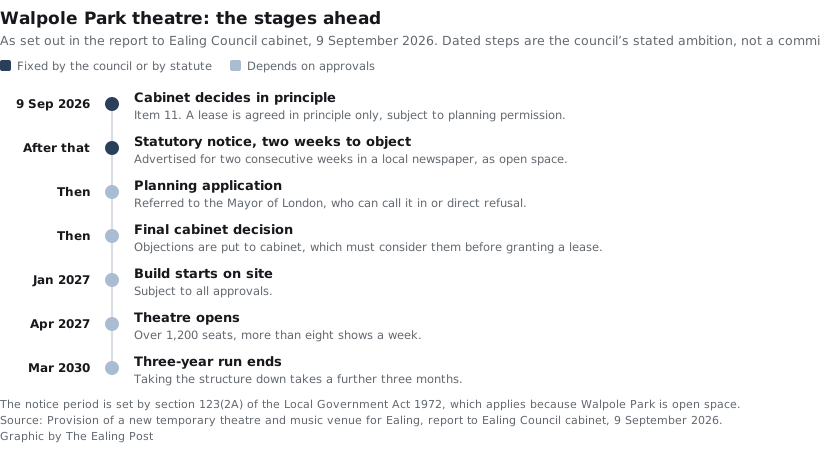
The ambition in the report is for build works to start on site in January 2027, subject to all approvals, for the theatre to open in April 2027, and for it to run for three years until March 2030. Taking the structure down would then take a further three months.
The case the council is making
The report puts numbers against the benefits, and they are worth reading as claims rather than outcomes:
- More than 40 full time equivalent jobs, across management, bar staff, front of house and stage door.
- West End productions “at prices local residents can afford”, so residents do not have to travel into central London.
- Additional footfall for Ealing Broadway and West Ealing, both of which the report says are showing empty shop units, with incentive schemes to push visitors into local restaurants.
- A previous Troubadour venue at King’s Cross, the report states, “contributed £17.5m to the local economy through over 1m visitors”.
The council also links the proposal to its Economy After 6pm Strategy 2024 to 2029, which identifies Ealing town as the borough’s principal evening destination. More than 6,000 residents took part in the engagement behind that strategy.
Officers describe the three-year run as a proof of concept for a permanent theatre somewhere else in the borough later.
What it means for you
If you use Walpole Park, nothing changes yet. Wednesday’s decision is in principle only, and no ground can be broken without planning permission. But the Ealing Summer Festival is already committed to moving out of the park under this proposal, and the report does not say where to.
If you want to object, watch for the statutory notice. The council must publish it in a local newspaper for two consecutive weeks, and that notice is your window. Objections go to cabinet, which has to consider them before granting any lease.
If you want to follow the decision, cabinet meets at 5pm on Wednesday 9 September 2026 in the Liz Cantell Room at Perceval House, 14 to 16 Uxbridge Road, W5 2HL. The meeting is broadcast live on the council’s YouTube channel. The theatre is item 11.
If you live near the park, the planning application is where the detail on noise, deliveries, hours and traffic will be tested. We will cover it when it is validated. Our Ealing planning coverage tracks applications as they land.
Frequently asked questions
Is a theatre definitely being built in Walpole Park?
No. The decision on 9 September 2026 is an in-principle one only. The lease still needs planning permission, a statutory notice period in which residents can object, and a further cabinet decision before anything is granted.
How big would the Walpole Park theatre be?
The report describes a temporary structure with a seating capacity for more than 1,200 people, running more than eight shows a week, fully accessible, heated and air conditioned, with a box office, lobby bar, merchandise shop and food offerings front of house.
What happens to the Ealing Summer Festival?
The report says the proposal replaces the Ealing Summer Festival events previously held in Walpole Park, and that those events will be relocated across the borough. It does not say which towns would host them.
How much would Troubadour pay the council?
The report says a fixed fee would be payable for three years, but the amount is in Appendix 3, the draft lease, which cabinet is being asked to keep out of publication under paragraph 3 of Schedule 12A of the Local Government Act 1972. The council states there are no revenue or capital cost implications for it, and that the income would go to parks and open spaces across the borough.
How do I object to the Walpole Park theatre?
Walpole Park is open space, so section 123(2A) of the Local Government Act 1972 applies. The council must advertise its intention to dispose of it for two consecutive weeks in a local newspaper and consider objections before completing the disposal. That two-week notice is the formal window. Objections go back to cabinet for the final decision.
When would the theatre open and close?
The council’s ambition is for build works to start in January 2027, for the theatre to open in April 2027 and for it to run three years to March 2030, followed by three months to take the structure down. Every one of those dates is subject to approvals.
Is Walpole Park protected?
Yes. It is a Grade II registered park and garden, list entry 1000847, registered on 1 October 1987, covering about 12 hectares. Its main entrance archway on Mattock Lane, built by Sir John Soane, is listed Grade I. The council’s own report names heritage impacts and Metropolitan Open Land as primary constraints.
Sources
- Ealing Council, Cabinet agenda for Wednesday 9 September 2026, for the meeting date, time, venue and the position of the theatre item on the agenda.
- Provision of a new temporary theatre and music venue for Ealing, report to Cabinet, 9 September 2026, for the recommendations, the three and a half year lease, the operator, the capacity, the jobs figure, the King’s Cross claim, the financial arrangements, the exempt appendix, the legal advice on section 123 and the Mayor of London referral risk. Appendix 2, the site plan, for the facilities list.
- Historic England, Walpole Park, list entry 1000847, for the Grade II registration, the registration date, the site area and the Grade I entrance archway.
- Companies House, Troubadour Theatres Limited, for the company number, incorporation date and registered office.
Have your say