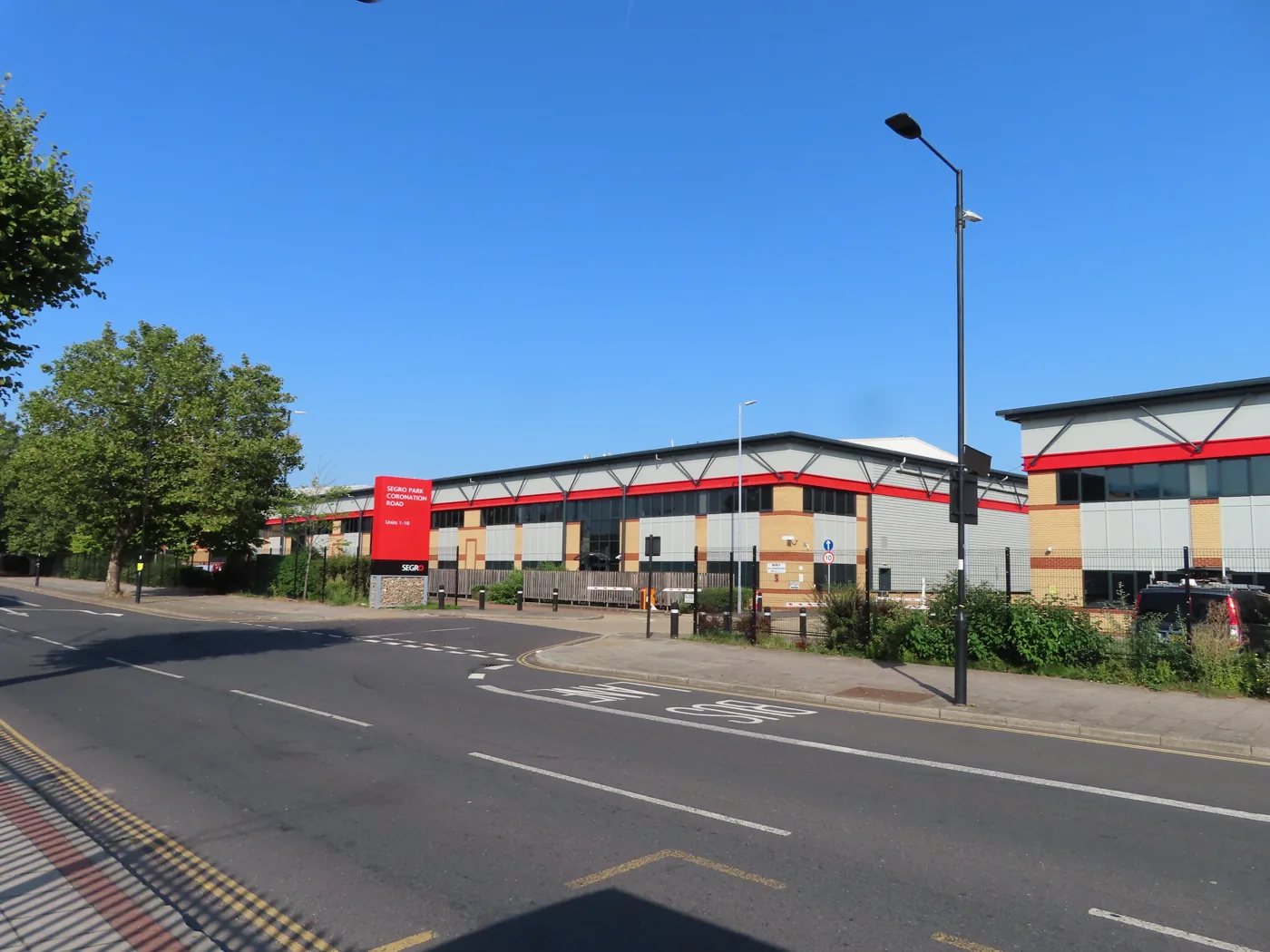

Ealing Council tells the Mayor the draft London Plan puts 11,000 homes on its industrial land and could cost 7,000 jobs. It wants targets that can be built.
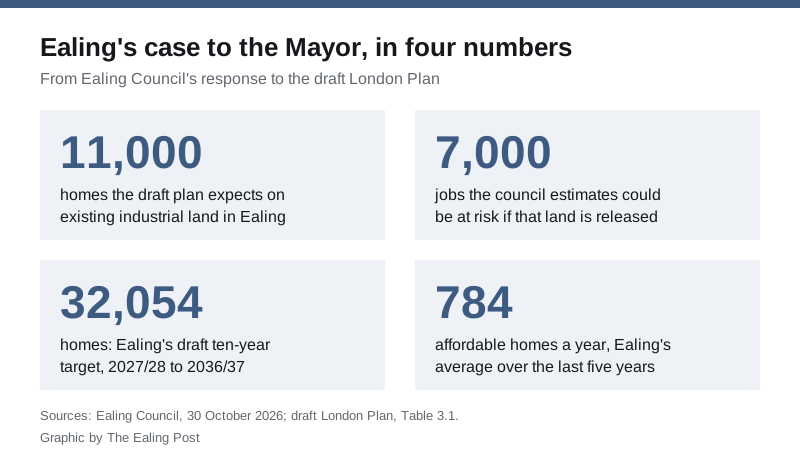
Ealing Council has told the Mayor of London that his draft London Plan expects around 11,000 new homes to be built on industrial land in the borough, and that releasing land on that scale could put around 7,000 jobs at risk.
The figures are the council’s own estimates, set out in its formal response to the draft plan and announced on 30 October. The council says it backs more homes, particularly “genuinely affordable homes to let”, but wants the Mayor to rethink targets it says promise homes “that cannot be delivered”.
What the council is objecting to
The draft plan gives Ealing a ten-year target of 32,054 homes for 2027/28 to 2036/37, the largest brownfield-only figure for any planning authority in London and 49 per cent above the current target. It is in Table 3.1 of the draft London Plan, and we set out what it means for each part of the borough when the consultation opened.
Because every one of those homes has to go on brownfield land, a large share falls on industrial estates. The council’s letter makes three main arguments:
- A housing target is not a delivery plan. The council says raising a target “does not, by itself, make homes deliverable”. Delivery depends on realistic land capacity, infrastructure, investment in affordable housing and whether the market can actually build what is planned.
- The plan has to be an economic plan too. The letter says a successful London Plan “cannot simply be a housing plan”, because communities depend on jobs, transport, public services and open space as well as homes.
- Industrial land, once lost, does not come back. That is the case behind the 7,000 jobs estimate.
The council’s record, in its own figures
The council leads with what it has built. It says Ealing delivered more new homes than any other London borough in 2024/25, has averaged 784 affordable homes a year over the last five years, and currently has more affordable housing under construction than anywhere else in the capital.
It has also had trouble getting some of its own schemes built. On 7 October the council signed off putting six half-built housing sites on the open market, three years after their builders collapsed. That is the kind of delivery problem the letter says a higher target will not fix on its own.
What the council leader said
Council leader Peter Mason said: “People in our borough want more genuinely affordable homes, good local jobs, and thriving neighbourhoods where they can build their futures. We want London to be ambitious about housing, but that ambition has to be matched by a plan that can actually deliver.
“Simply increasing housing targets will not build the homes London needs. We need the investment and infrastructure to deliver them, while protecting the jobs and businesses that drive our economy.
“This cannot be a choice between homes or jobs. We want to work with the mayor on a London Plan that delivers both and creates stronger communities for the future.”
The case for the industrial estates
Councillor Monica Hamidi, the council’s cabinet member for good growth, said: “Our industrial areas are a vital part of our economy. They provide space for businesses to grow, support thousands of jobs, and are part of supply chains across London. Once we lose this land, it is extremely difficult to replace.
“That’s why we’re asking the mayor to make sure housing targets are based on what can realistically be delivered, while protecting the land we need for jobs and economic growth.
“We want to deliver the right growth for our borough, for both existing and new residents. It needs to come with good, well-paid jobs, more genuinely affordable homes, and the investment and infrastructure that growing communities need.”
The draft plan itself already points at Ealing’s industrial land. Its chapter 6 names the whole of The Vale in Acton among eight industrial sites in London where housing-led schemes “should be supported in advance of release from their industrial designation”, as we reported in August. The council’s announcement does not say which estates make up its 11,000 figure.
What it means for you
- If you work on an industrial estate in the borough, in Park Royal, Acton, Greenford, Southall or Northolt, this is the argument about whether that site stays in employment use. The council’s 7,000 figure is its estimate of what is at stake if the draft plan goes through as written.
- If you are waiting for an affordable home, the council says it is not arguing for fewer homes but for targets backed by the investment and infrastructure to build them.
- The draft is not final. The public consultation closed on 15 October. The Mayor considers the responses, including Ealing’s, and the plan then goes to an Examination in Public in front of planning inspectors, where the targets can still change.
- What comes through the planning register in the meantime is on our Ealing planning news page.
Ealing Council’s press office can be reached at press@ealing.gov.uk or on 020 8825 8686.
Have your say